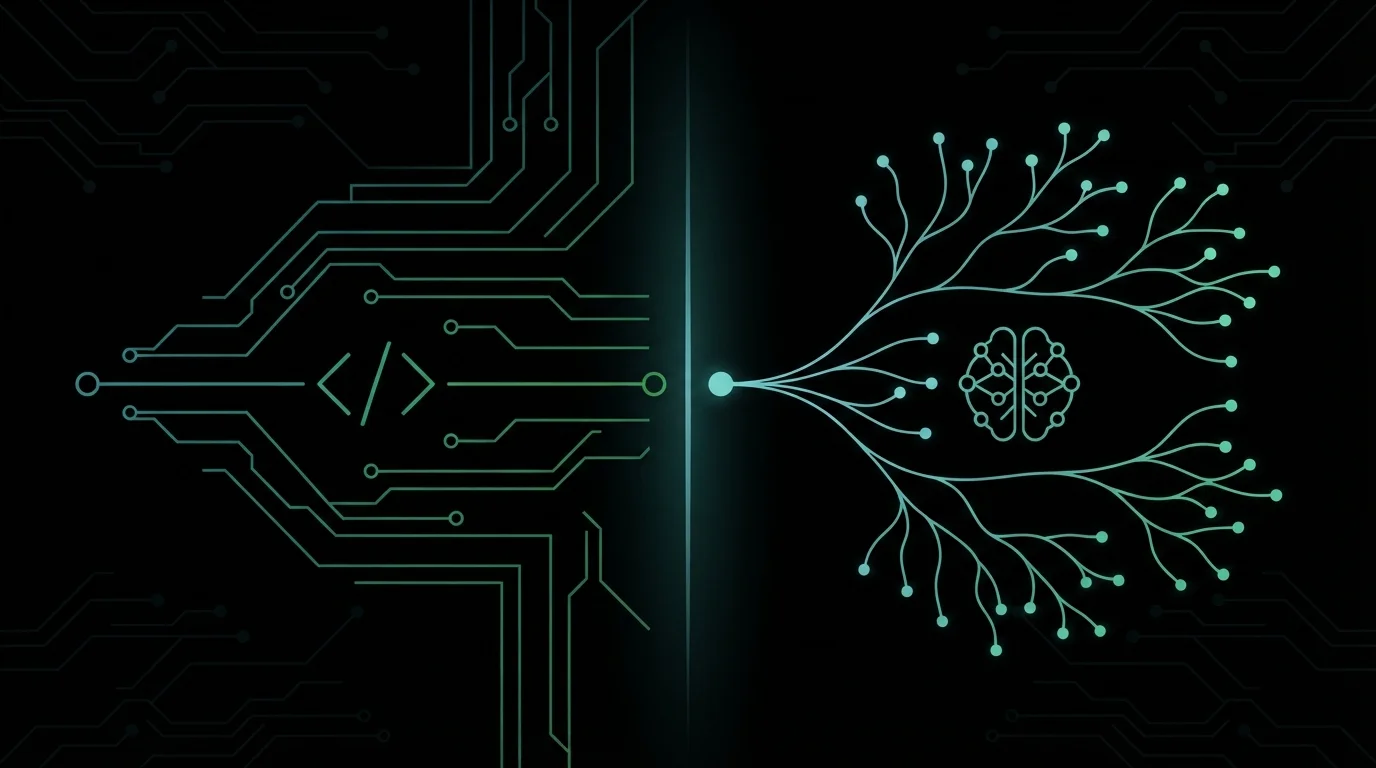
Traditional software engineering builds systems that do exactly what they’re told. AI product engineering builds systems that behave probabilistically, and that single difference changes how you architect, test, ship, and maintain the product, not just what team builds it. Traditional engineering runs on deterministic logic: given the same input, the system produces the same output, every time. AI-powered products don’t work that way. The model might behave differently tomorrow than it does today, even with no code changes, because the thing driving its behavior, the model itself, keeps evolving.
Here’s what that difference actually changes in practice.
Key takeaway: The core shift is deterministic logic versus probabilistic behavior, and it ripples through everything, testing becomes evaluation, launch stops being the finish line, data becomes a core engineering asset, and new architecture layers (RAG, prompt management, guardrails, agent orchestration) show up that traditional software never needed. None of this replaces standard engineering discipline, it adds requirements on top of it.
The core shift: deterministic logic vs. probabilistic systems
In traditional software, correctness is binary. A function either returns the right value or it doesn’t, and a passing test suite means the logic is verified. AI-powered features don’t have that guarantee. A language model might answer a question correctly nine times out of ten and subtly wrong the tenth time, with no code bug to point to, because the “logic” isn’t hardcoded, it’s learned from data and expressed probabilistically.
This isn’t a minor technical detail. It changes what “done” means for a feature, what QA looks like, and what you’re actually shipping liability for.
1. Testing becomes evaluation, not just verification
Traditional QA asks: does this code do what the spec says? AI product engineering has to ask a different question: does this model behave acceptably across the range of things real users will throw at it, including inputs nobody explicitly designed for?
That requires evaluation pipelines, not just test suites: benchmark datasets, automated scoring against expected behavior, human review of edge cases, and ongoing testing for hallucination, bias, and failure modes that only show up with real-world variety. A green test suite doesn’t mean the AI feature is safe to ship, it means the model performed well against the cases you thought to check.
2. The product doesn’t stop changing at launch
Traditional software degrades slowly, and only when something around it changes, a dependency updates, an OS patches, traffic grows past what the architecture was designed for. Barring those external changes, code that worked at launch keeps working.
AI-powered products don’t get that stability for free. Models drift as real-world data shifts away from what they were trained or tuned on. User behavior changes. What performed well six months ago can quietly degrade without a single line of code changing. That means AI products need continuous monitoring for model performance, not just uptime and error-rate monitoring, and a plan for retraining or re-tuning that traditional software maintenance schedules don’t need to account for.
3. Data becomes a first-class engineering concern, not a downstream input
In traditional development, data is usually something the application reads and writes, important, but not something engineering is responsible for shaping. In AI product engineering, the data is a large part of the system’s behavior. Data quality, coverage, and bias directly determine what the model can and can’t do well, which makes data pipeline work, labeling, and data governance a core engineering discipline rather than a separate concern handled elsewhere.
Teams that treat data prep as an afterthought consistently end up rebuilding it mid-project once they discover the model’s failures trace back to what it was trained or grounded on, not how it was integrated.
4. New architecture patterns that traditional software doesn’t need
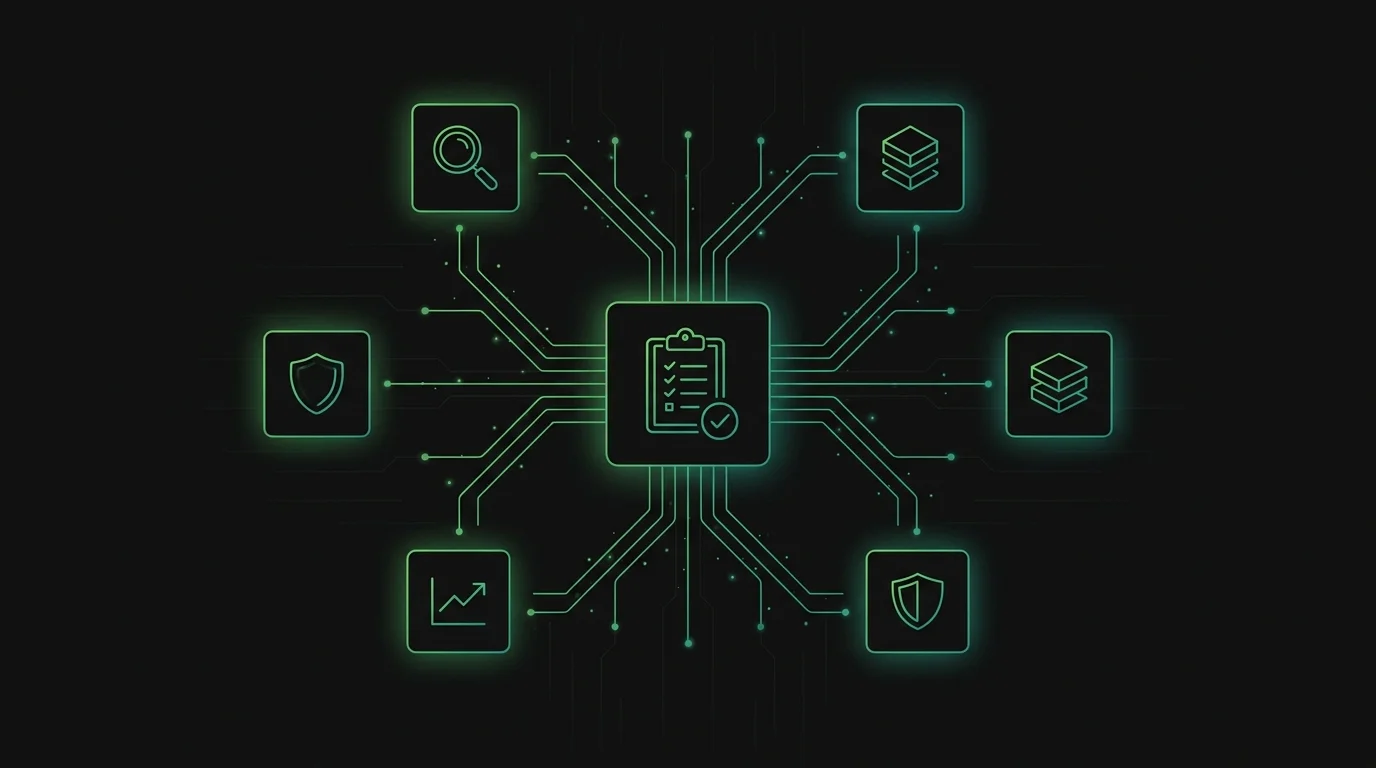
AI product engineering introduces components that don’t exist in a typical software stack:
- RAG (retrieval-augmented generation) pipelines, grounding model responses in your own data instead of relying solely on what the model learned during training
- Prompt engineering and management, prompts function like a new category of application logic, and need versioning, testing, and review like code does
- Guardrails and safety layers, filtering, validation, and fallback behavior for when the model produces something wrong, harmful, or out of scope
- Agent orchestration, for products where the AI takes multi-step autonomous actions rather than returning a single response, you need frameworks to sequence, constrain, and monitor those actions
None of these have a direct equivalent in traditional software architecture. They’re not “extra features”, they’re structural, and skipping them is how AI products end up unreliable in production.
5. Cost structure shifts from fixed build cost to ongoing operating cost
A traditional software feature, once built, mostly costs money to host and occasionally maintain. An AI feature costs money every time it runs, every model call has a real, variable, usage-scaled cost. That changes how you think about budgeting: an AI feature isn’t a one-time engineering investment, it’s a recurring line item that scales with product success, and teams need cost monitoring built into the product from day one, not bolted on after the first surprising bill.
6. Governance and explainability move earlier in the process
Traditional software can usually explain its own behavior, you can trace a bug back through the code path that produced it. AI systems, particularly ones built on large language models, are harder to fully explain, which raises real questions for regulated industries and any product where a wrong or biased output has real consequences.
That pushes governance, audit trails, explainability requirements, human-in-the-loop review for high-stakes decisions, earlier into the engineering process than it typically sits in traditional software, where compliance work often happens closer to launch.
What doesn’t change
It’s worth being clear about what AI product engineering doesn’t replace, because this is where teams overcorrect:
- Software engineering discipline still applies. Version control, code review, CI/CD, security practices, and architectural planning aren’t optional just because a model is involved, if anything, AI’s unpredictability makes disciplined engineering around it more important, not less.
- Product fundamentals don’t change. You still need a real problem, a validated hypothesis, and a scoped MVP. AI doesn’t exempt a product from proving it’s worth building.
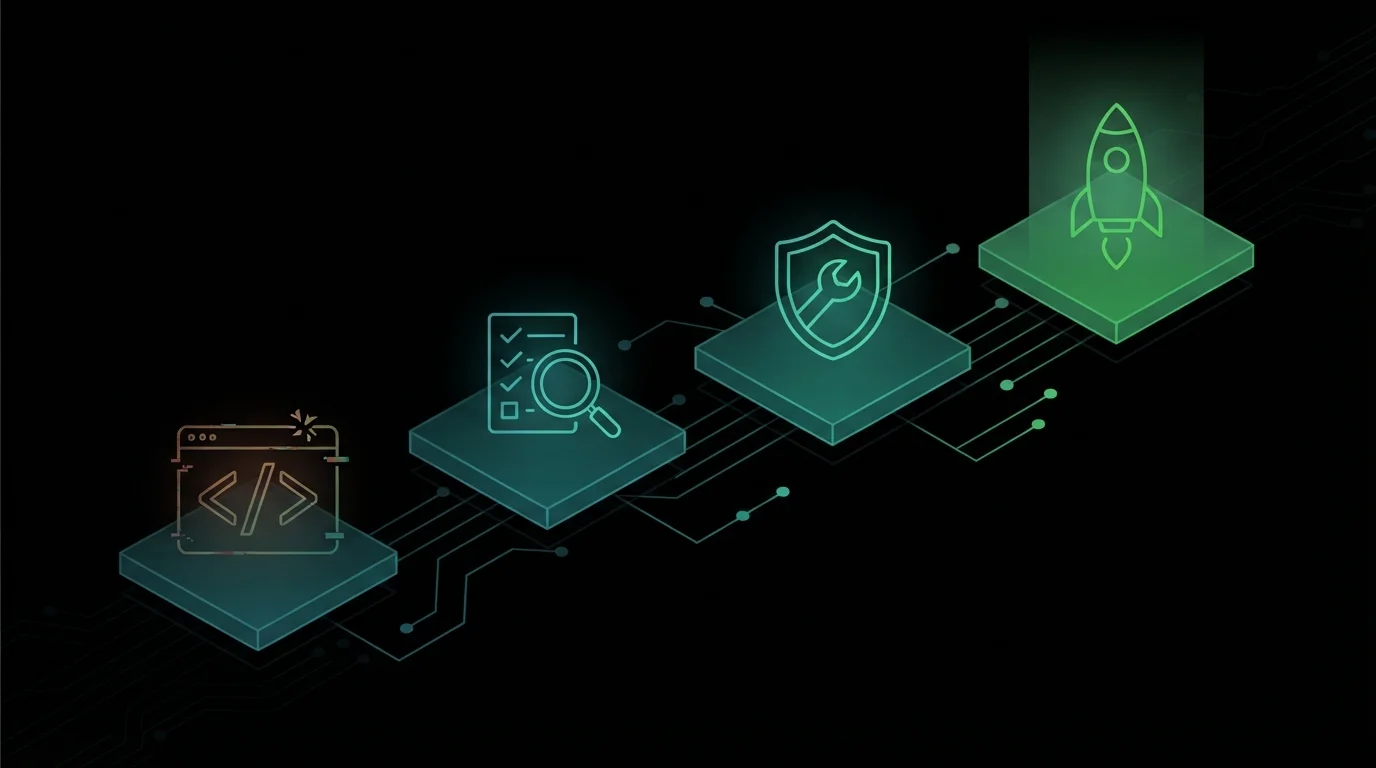
- The SDLC stages are the same; how you execute them changes. Requirements gathering, design, implementation, testing, deployment, and maintenance still apply, but each stage now has to account for probabilistic behavior instead of assuming deterministic logic throughout.
AI product engineering vs. traditional software engineering: quick comparison
| Traditional Software Engineering | AI Product Engineering | |
|---|---|---|
| Core logic | Deterministic, same input, same output | Probabilistic, output can vary and evolve |
| “Done” means | Passes the test suite against the spec | Performs acceptably across evaluation benchmarks and real-world variety |
| Post-launch behavior | Stable unless external dependencies change | Can drift as data and usage patterns shift |
| Core engineering asset | Code | Code + data + model behavior |
| New architecture layers | N/A | RAG pipelines, prompt management, guardrails, agent orchestration |
| Cost model | Mostly fixed build + hosting cost | Build cost + ongoing, usage-scaled inference cost |
| Governance | Typically addressed near launch/compliance stage | Needs to start earlier, explainability, audit trails, human review |