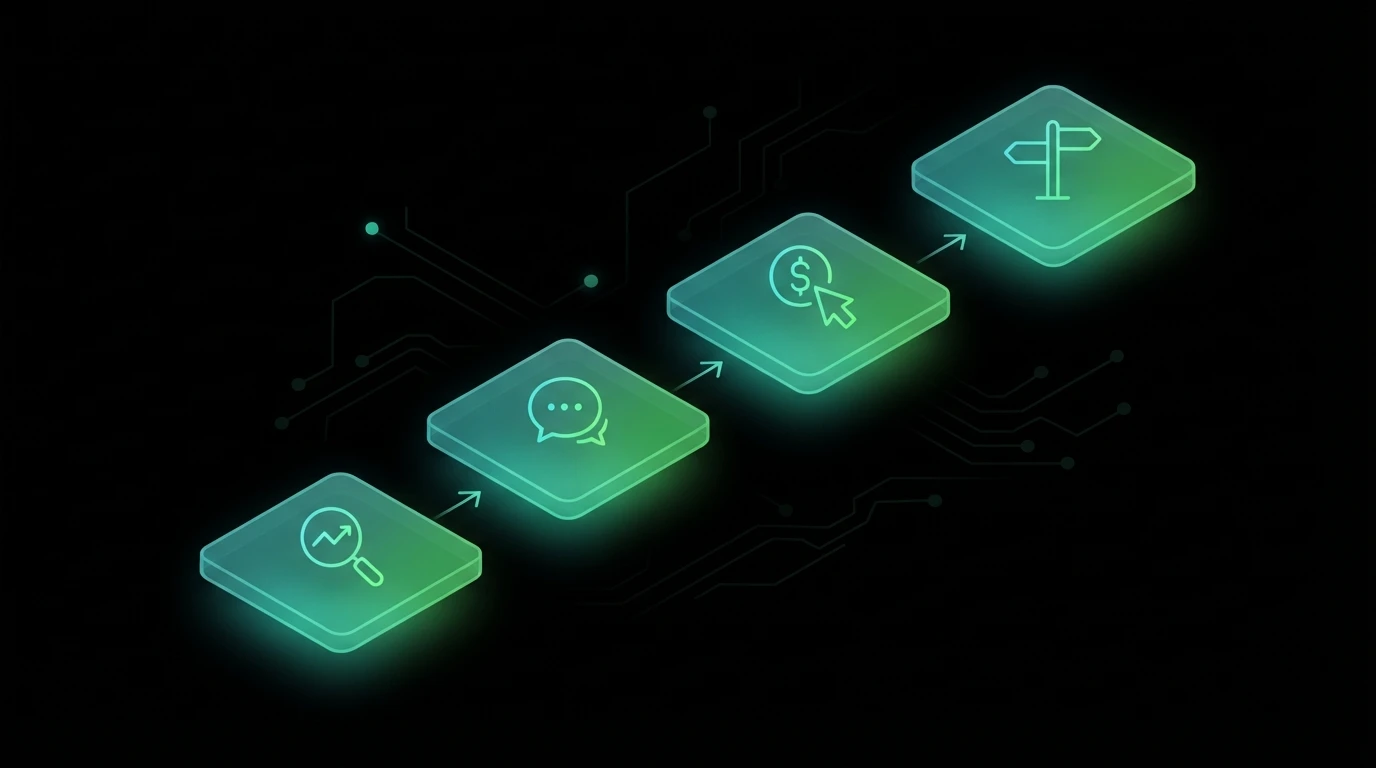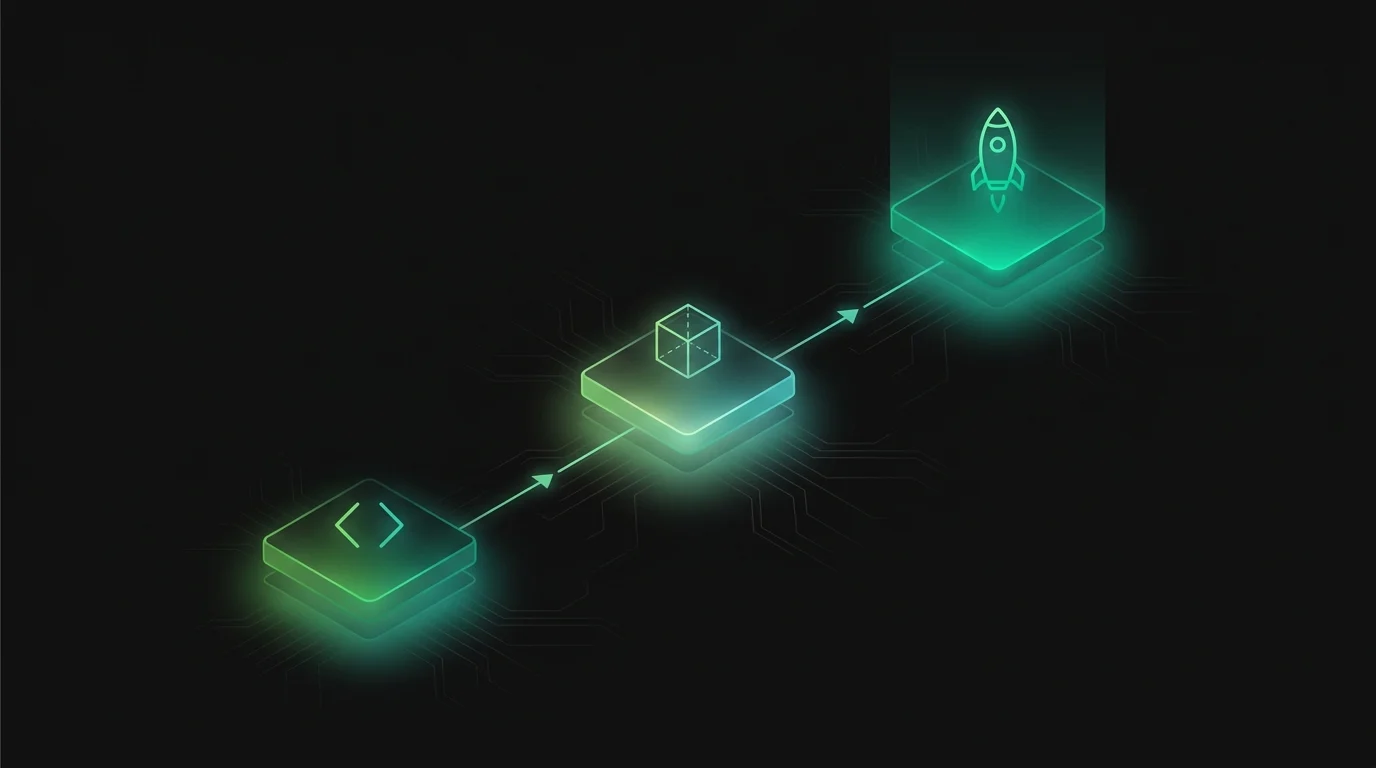
A proof of concept (POC) answers “can this be built at all?” A prototype answers “what should this look and feel like?” An MVP answers “will people actually use and pay for this?” Most founders build them in the wrong order, or skip straight to an MVP, and end up paying to relearn things a $2,000 exercise could have told them for free.
Here’s how to tell the three apart, and how to decide what to build first for your specific idea.
Key takeaway: A POC, a prototype, and an MVP each answer a different question, feasibility, experience, and demand, at a different price point. Most overspending happens when founders skip straight to an MVP and discover mid-build a technical or UX problem that a $2,000–$20,000 POC or prototype would have caught first.
Quick definitions
| Proof of Concept (POC) | Prototype | MVP | |
|---|---|---|---|
| Question it answers | Is this technically possible? | What should it look/feel like? | Do people want it? |
| Audience | Internal team, technical stakeholders | Internal team, investors, early testers | Real, paying or actively using customers |
| Built for | Feasibility | User experience and flow | Market validation |
| Typical output | Code snippet, script, or backend proof | Clickable design (Figma) or barebones UI | A working product with core functionality |
| Typical cost | $2,000–$15,000 | $3,000–$20,000 | $15,000–$100,000+ |
| Typical timeline | Days to 2 weeks | 1–3 weeks | 6–16 weeks |
| Customer-facing? | No | Usually not | Yes |
Proof of concept: “Can this even be built?”
A POC exists to de-risk a technical assumption before you spend real money. It’s not meant to be pretty, usable, or shown to customers, it’s meant to answer one narrow question, fast.
Build a POC first when:
- Your idea depends on something unproven, a novel AI model behavior, a hardware integration, a real-time data pipeline at scale, a third-party API that might not do what its docs claim
- You’re not sure the core technical mechanism will actually work
- A “no” here should kill or seriously reshape the idea before you invest further
Skip the POC when:
- You’re building with well-understood, proven technology (a standard CRUD app, a typical e-commerce flow), there’s nothing to prove
- The risk in your idea is about demand, not feasibility
A POC is disposable. Nobody productionizes POC code. Its entire value is the answer it gives you, not the artifact itself.
Prototype: “What should this feel like?”
A prototype is about experience, not code. It’s usually a clickable Figma flow or, at most, a barebones front-end with no real backend behind it. The goal is to test navigation, layout, and user flow before a single line of production code gets written.
Build a prototype first when:
- You need to pressure-test the user experience, does the flow make sense, is anything confusing, does it match how your target user actually thinks
- You’re raising a pre-seed round and need something visual to show investors before committing to a full build
- Your team or client stakeholders disagree on what the product should look like, and you need to align before development starts
Skip the prototype when:
- The UX is genuinely simple or closely follows an established pattern (a standard onboarding flow, a familiar dashboard layout)
- You already have strong, tested design conventions to build from
A good prototype is cheap insurance against building the wrong interface. Redesigning Figma frames costs a few hours. Redesigning a built product costs weeks.
MVP: “Will people actually use this?”
An MVP is the first version of your product that real users can actually use, with just enough functionality to test your core value proposition in the real world. It’s not a stripped-down demo; it’s a working product, just a deliberately narrow one.
Build an MVP when:
- You’ve already de-risked the technical feasibility (POC, if needed) and the UX direction (prototype, if needed)
- You’re ready to get real usage data, not opinions, sign-ups, retention, willingness to pay
- Your next milestone (funding round, board update, internal go/no-go decision) depends on evidence that people want this, not just that you can build it
A good MVP is not:
- Every feature on your roadmap, built at 20% quality
- A polished, full-featured product, that’s a v1, not an MVP
- A one-off internal demo, an MVP has to survive contact with real users
Why the order matters
The reason founders overspend on their first build almost always traces back to skipping a step:
- Skip the POC, build the MVP, and discover mid-build that the core technical assumption doesn’t hold → you’ve now paid MVP prices to learn what a POC would have told you for a fraction of the cost.
- Skip the prototype, build the MVP, and discover users don’t understand the flow → you’re now redesigning production code instead of a Figma file.
- Build a POC and prototype for an idea that never needed either → you’ve added weeks to your timeline for validation you didn’t actually need.
The right sequence isn’t “always do all three.” It’s: identify your idea’s biggest open question first, and build only what answers it.
A simple decision framework
Ask yourself, in order:
- Is there a real technical unknown? (Not “is this hard to build,” but “might this actually not work.”) If yes → start with a POC.
- Is the user experience genuinely unclear or novel? If yes → build a prototype next (or first, if there’s no technical unknown).
- Have you answered whether it can be built and how it should feel? Now build the MVP, scoped to test the one thing that determines whether this business works.
Most ideas don’t need all three. A lot of straightforward SaaS or marketplace ideas can skip straight to a lean MVP because the technical risk is low and the UX patterns are well established. Where founders lose money is building an MVP when what they actually needed was a $5,000 POC to answer one open question first.